The palila is a small yellow and grey honeycreeper endemic to Hawai’i. It is critically endangered. Between 500 and 1500 individuals are left in the world, all of them on the slopes of Mauna Kea.
About this video
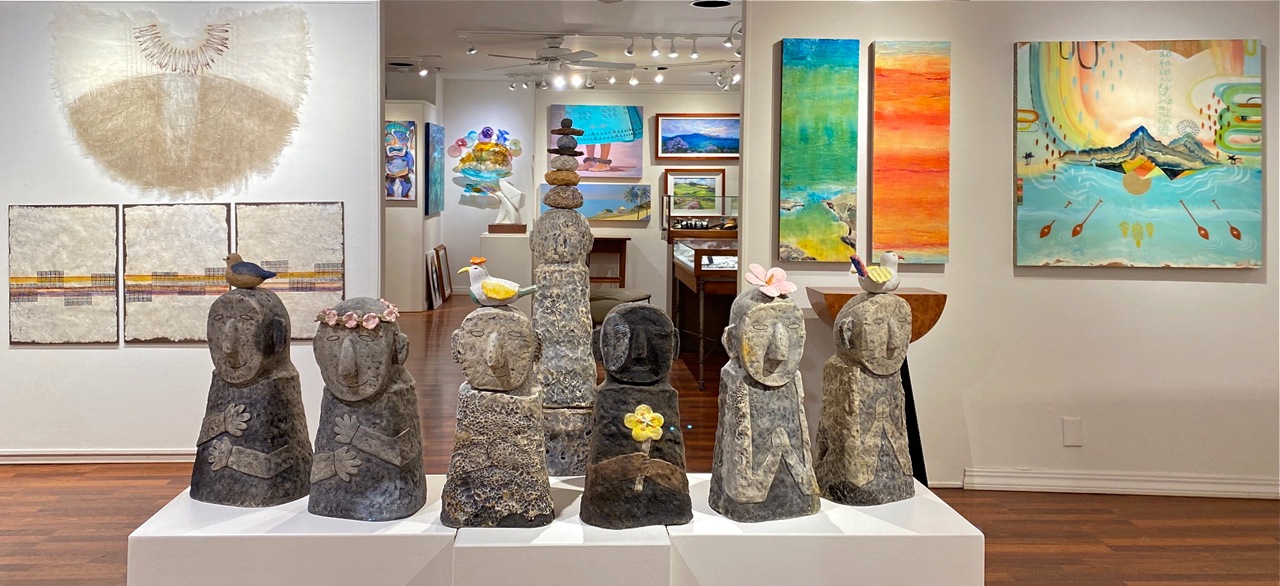
Artist Sarah Taylor Ko describes building this body of work around makawalu — literally “eight eyes” — the Hawaiian concept of abundance of perspectives, in which even the empty spaces between the fingers hold plenty. Her collaborator, a University of Hawai’i at Hilo graduate researcher studying palila vocalizations from the first recordings in the 1970s to today, shared field notes, hand-drawn maps, and spectrograms that Ko collaged into eight paintings — treasure maps to a rare, vanishing corner of the palila’s world on the slopes of Mauna Kea, where the viewer hunts for a hidden bird or a māmane tree.
The project’s eight parts also included poems written from the birds’ recorded songs, clay palila eggs sent from around the world, and a mural painted with an 11th-grade class during COVID, using primary colors the students learned to mix themselves. Ko recounts standing at the entrance to the palila’s forest while her collaborator chanted an oli asking permission to enter — and how the research shows that as the palila’s numbers decline, so does the variety of their song.